

 Posted on: March 2, 2026
Shoreline and Lakefront Builds: Design Choices That Protect the View and the Home
A shoreline property in Ontario offers something special: long views, natural light, and a lifestyle that changes with the seasons. At the same time, building near the water comes with realities that do not show up on an in-town lot. Wind exposure, moisture, freeze-thaw cycles, and drainage patterns can shape a home’s performance over time. The best lakefront homes are designed to honour the view while respecting the shoreline environment.
If you are planning a custom home or cottage build in the Kawarthas or cottage country, thoughtful early decisions can protect your investment and your day-to-day comfort. Below are the key design choices that balance lifestyle and long-term durability without sacrificing the reason you bought a shoreline lot in the first place.
Quick answers to common questions
What is the most important design choice for a lakefront build?
Start with orientation and placement. The way your home sits on the lot affects light, wind exposure, privacy, drainage, and the strength of your views.
Do big windows create problems near the water?
Not if they are planned properly. Window location, sizing, performance, and detailing matter more than the idea of large glass itself.
How do I protect the home from shoreline moisture?
Good building envelope decisions, durable exterior materials, and a clear drainage strategy are essential for performance in Ontario’s four-season climate.
For inspiration across different settings and styles, you can browse recent builds and project examples here: https://rmoorehomes.com/projects/
Orientation: protect the view, capture the light, manage exposure
Most people plan a shoreline build around one goal: maximizing the view. That is a great starting point, but orientation is also about comfort and performance. A home that faces the water directly may have incredible sightlines, but it can also take the brunt of prevailing winds, driving rain, and winter conditions.
What to think about early
- Sun path: Morning and afternoon light affect glare, heat gain, and comfort
- Prevailing winds: Exposure near the water can be stronger and more constant
- Privacy: Shorelines can be busy in summer, so sightlines work both ways
- Outdoor living: Decks and covered spaces should be usable, not just scenic
A strong plan often includes purposeful window placement and outdoor spaces that still feel protected. If you are aiming for year-round use, it also helps to keep four-season comfort at the centre of your design choices. Four-Season Cottage Design Essentials for the Kawarthas gives some helpful ideas to keep in mind
Big window planning: more than size, it’s about placement and performance
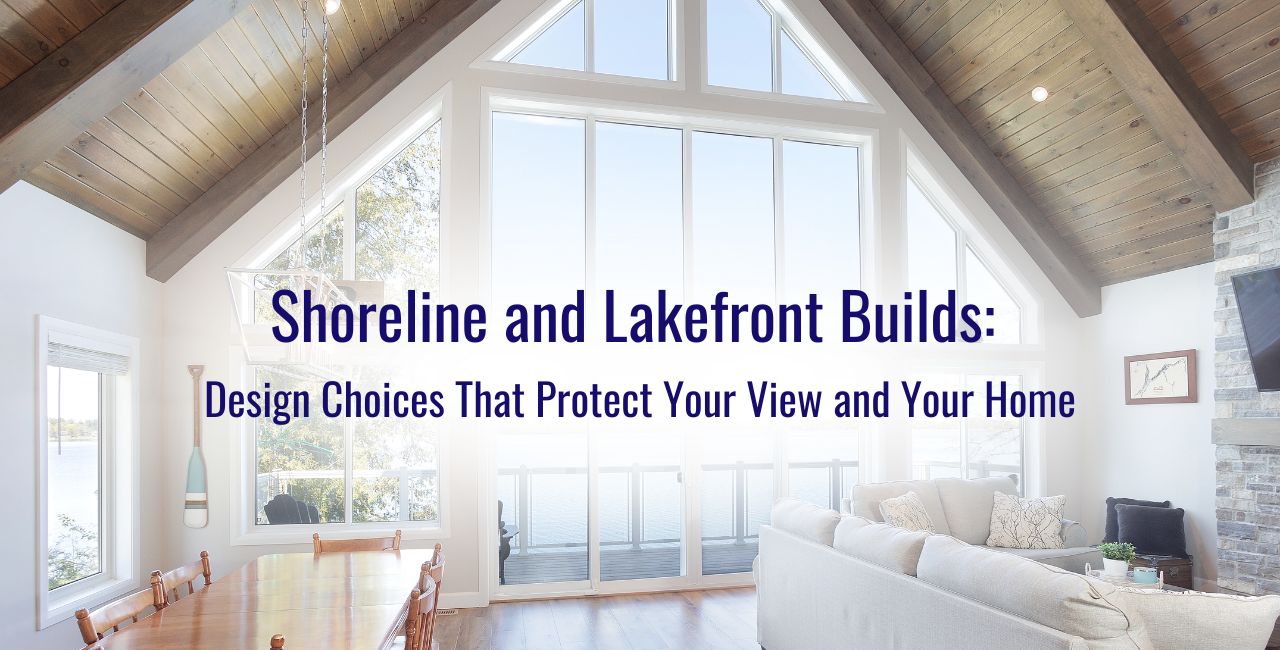
Big windows are one of the most defining features of modern lakefront homes. The challenge is that glass is also one of the most demanding parts of the building envelope. Near the water, you can experience higher humidity, stronger winds, and a lot of seasonal temperature swings.
The goal is to plan big windows intelligently.
Design choices that make a difference
- Right-sized glass for each room: Not every space needs the same scale
- Where the glass sits: Views, sun exposure, and privacy all matter
- Performance-focused window selection: Insulation values and durability matter in Ontario
- Overhangs and shading: Helps manage summer heat gain and glare
- Condensation awareness: Especially for year-round homes where interior humidity is higher
Your design will feel open and lake-facing, while using strategic placements and detailing to support comfort.
Moisture and wind: what shoreline exposure means for the build
Waterfront sites often have microclimates. Wind off the lake can be stronger and more persistent. Moisture levels can be higher. That can increase wear on exterior finishes and create more demanding conditions for the building envelope.
Key performance priorities
- A strong building envelope: Air sealing, proper flashing, and careful detailing
- Durable exterior assemblies: Materials and installation both matter
- Thoughtful rooflines: Overhangs can help protect walls and windows
- Protected entries: Reduce snow and wind-driven moisture at doors
When these factors are considered early, the home feels solid and comfortable, even during seasonal changes when lake weather can shift quickly.
Materials that wear well: choosing finishes for shoreline durability
Many shoreline homes lean into natural textures: wood tones, stone, and warm finishes that fit the landscape. That can work beautifully, and material choices should match the level of exposure at the build site.
On lakefront lots, the most common frustration is premature wear. Fading, peeling, rusting hardware, and staining can show up faster when wind and moisture are constant. Choosing the right materials helps keep the home looking good with less ongoing maintenance.
Practical material considerations
- Exterior cladding: Choose options that handle moisture and freeze and thaw well
- Trim and detailing: These areas often show wear first
- Decking and railings: High-exposure materials matter near water
- Hardware: Select durable finishes and components for exterior use
- Roofing decisions: Consider snow shedding and long-term resilience
A builder with local experience, like R. Moore Homes, can guide selections that match both aesthetic goals and shoreline realities.
Drainage and grading: protect the foundation and the landscape
Shoreline lots require thoughtful drainage planning. This is not just about keeping water away from the foundation. It is also about protecting the landscape and maintaining stable, functional outdoor areas.
Spring melt and heavy rain events reveal how water moves across a property. If grading is not handled carefully, you can end up with pooling near the foundation, soft deck supports, or erosion patterns that become a long-term issue.
Drainage choices that support long-term performance
- Lot grading that directs water away from the home
- Foundation drainage planning
- Managing downspout discharge so water does not return toward the foundation
- Stable pathways and access routes that do not become muddy or uneven
- Landscaping decisions that work with water movement rather than fighting it
Drainage is one of the least glamorous topics in custom home design, but it is one of the most important for long-term durability.
Build placement: balancing view, access, and everyday livability
Sometimes the best view is not the best building location. A home placed too close to the shoreline can face higher exposure, tighter working space, and more complicated grading. A home placed too far back might lose the lifestyle feeling the owners want.
A strong plan considers:
- View corridors
- Outdoor living usability
- Access and driveway reality
- Privacy and neighbouring sightlines
- Long-term durability and maintenance
When you plan these items early, you avoid compromises later, and the final home feels intentional.
Frequently asked questions
How do I maximize the view without creating glare and overheating?
Use orientation and strategic shading. We love floor-to-ceiling windows, but not on every wall. Placement, overhangs, and thoughtful room planning often solve comfort while maximizing the view.
Are shoreline homes more expensive to build?
They can be, depending on access, grading, drainage planning, and material requirements. A clear planning process helps you understand the true scope early.
Where can I see examples of Lake Country builds?
Check out some of our Projects and explore four-season planning guidance
Have questions or want more information on planning your lakefront home or cottage? Contact the R. Moore Homes team today.


